Setting Up a Safe Backyard Archery Range: A Beginner’s Guide
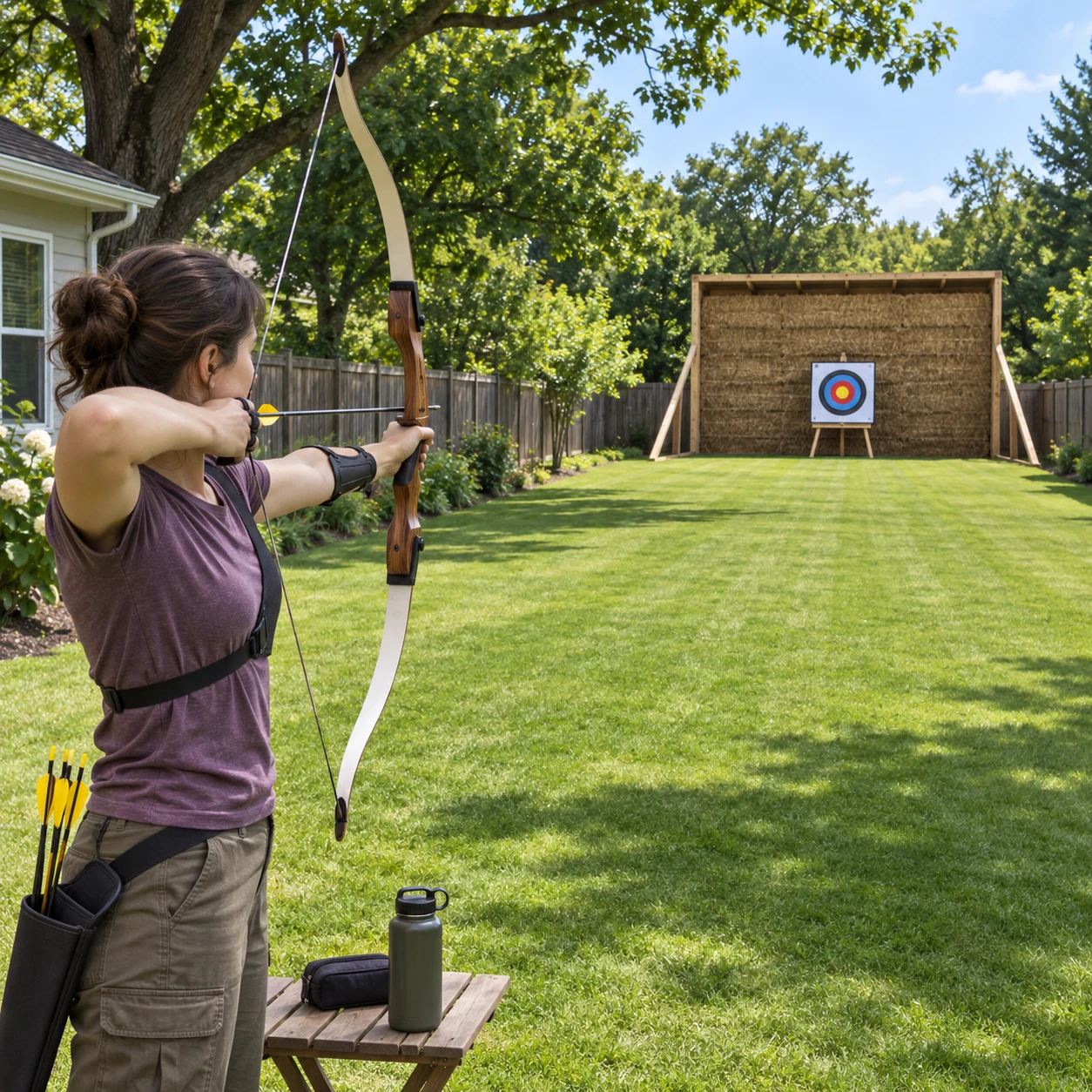
A backyard archery range can make practice convenient, but a target and a bow are not enough to make it safe. Before you shoot, check whether home practice is allowed, plan for missed arrows, and make sure people, pets, and neighboring property are protected.
Use this guide to assess your space and build a simple routine. If you cannot create a safe shooting lane with dependable arrow containment, practice at an archery club or another approved range instead.
Check whether backyard archery is allowed
Backyard archery is allowed only when it complies with the rules that apply to your location and property. Check local regulations, property restrictions, and neighborhood requirements before buying or setting up equipment.
Rules can vary between cities, counties, and housing communities. Some places restrict projectile weapons or disallow shooting within residential areas; a lease, homeowners’ association, or condominium agreement may also impose limits. Do not assume that a large yard or a private property line creates an exception.
Start by checking your municipal or county website and contacting the relevant local office if the wording is unclear. Review your lease or community rules, too. Ask specifically whether archery practice is permitted, whether there are restrictions on bows or shooting locations, and whether permission is required.
Get a clear answer before practicing. If a rule is ambiguous, seek clarification rather than relying on a neighbor’s setup as proof that yours is permitted. Legal permission is only the first check: you still need a safe lane, reliable backstop, and a way to keep others out of the range.
Choose a safe location and shooting direction
Choose a location with a clear shooting lane, a safe area around and beyond the target, and reliable arrow containment. If people, animals, roads, homes, or public spaces could be exposed to a missed or passing arrow, the location is unsuitable.
Plan the direction of every shot before placing the target. Point the bow toward the safest available part of the property, away from neighboring yards, windows, sidewalks, streets, and places where someone may appear unexpectedly. A fence, hedge, or line of trees should not be treated as an arrow barrier unless it is specifically suitable for stopping the arrows you use.
Think beyond the target face. Arrows can miss, pass through a worn target, or glance off at an angle. Your plan must account for those possibilities, with enough clear space and a backstop positioned to contain likely misses. Keep the shooting lane free of hard surfaces or objects that could cause a dangerous deflection.
Walk the full line from the shooting position to and past the target. Look for gates, shared boundaries, windows, paths, and access points. If you cannot confirm what is behind the target or keep the whole area controlled, select another location. A safe shooting lane matters more than convenience.
Set up a target and reliable backstop
Use a target designed for your arrows and a backstop that can help contain missed shots. A target face catches intended hits; it does not guarantee that every arrow will stop or stay in the target.
Choose a beginner-friendly target with a suitable rating for your bow type and draw weight. Follow the manufacturer’s instructions for placement and use. Check the target regularly for worn spots, holes, loose sections, or damage that could let arrows pass through. Replace it when it no longer stops arrows reliably.
A backstop should sit behind and cover the target area, including the space where a missed arrow might travel. Its suitability depends on the bow, arrow, distance, material, and construction. Use a purpose-made archery backstop or a setup specifically recommended by a qualified archery retailer or range professional for your equipment. Do not assume that plywood, a thin blanket, a fence, or a stack of household items will safely stop an arrow; some materials can be penetrated or cause deflection.
Secure the target and backstop so they cannot shift or fall. Keep the area behind them inaccessible, and never place a target where a stray arrow could leave your property. If you cannot establish dependable arrow containment, do not shoot there. A club range is a safer alternative than improvising a barrier.
Mark the shooting line and clear the range
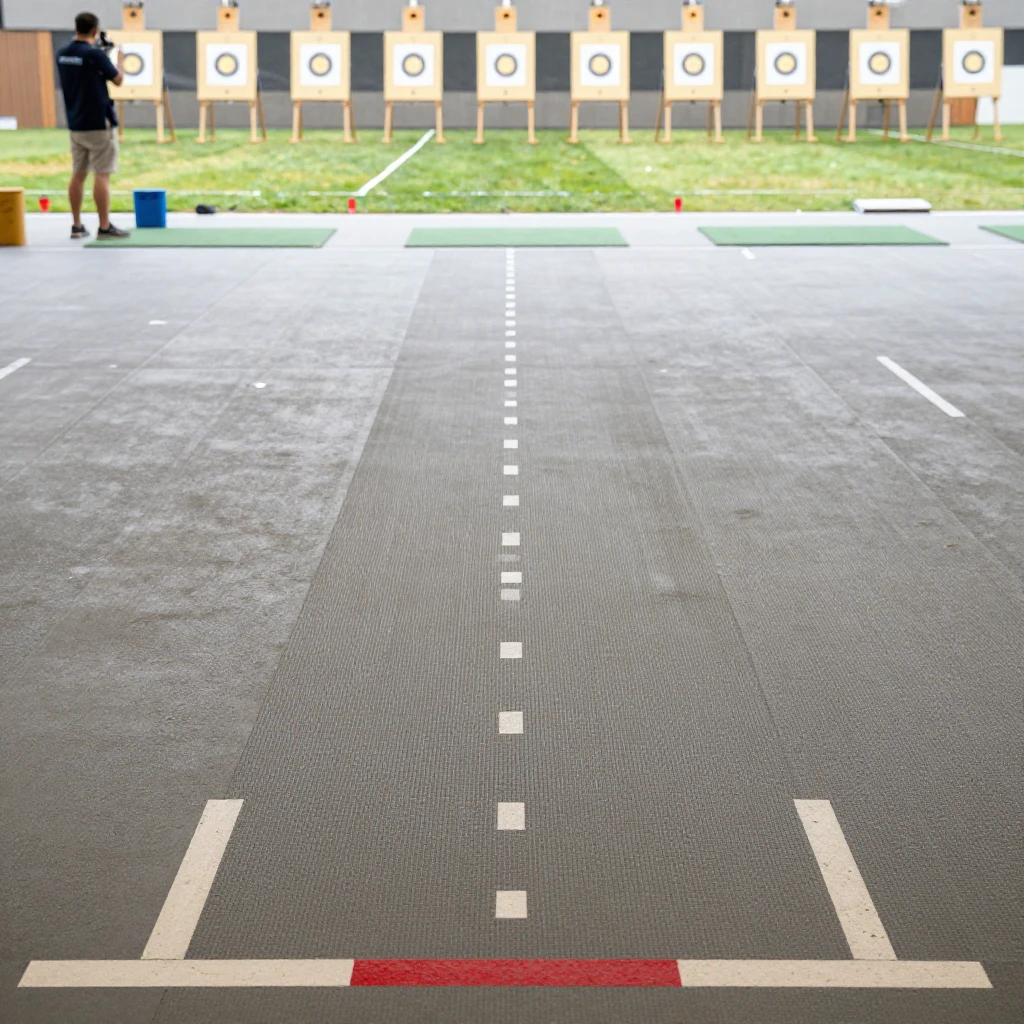
Mark a consistent shooting line and keep the entire range clear before anyone nocks an arrow. The shooting line gives each archer a defined place to stand; it does not make an unsafe lane safe.
Use a visible marker on the ground, such as a line of tape or a flat marker that will not become a trip hazard. Set it at a distance suitable for your target and experience, following the target and equipment instructions. Beginners often benefit from starting closer under controlled conditions, then increasing distance only when they can shoot consistently and retrieve arrows safely.
Before shooting, check the lane, target area, backstop, and space beyond them. Make sure gates are closed and that no person or pet can enter unnoticed. A household member should know that practice is underway and how to signal a stop. If the yard has access points you cannot control, it may not be an appropriate range.
Never shoot when someone is downrange or when you cannot see that the range is clear. Do not shoot over or around a person, even briefly. Establish a clear signal, such as “Stop,” that means every archer lowers the bow and stops shooting at once. When in doubt, pause and check.
Use beginner-appropriate equipment and protection
Choose a beginner bow you can control comfortably, compatible arrows, a suitable target, and basic protective gear. Equipment should match your experience and the space available, not simply deliver the greatest power.
A recurve bow or another entry-level setup may suit a new archer, but draw weight and fit matter. Ask a qualified archery shop or instructor to help select a bow you can draw and hold with good form. Use arrows specified for that bow; arrows that are too short or otherwise unsuitable can create serious hazards. Follow the manufacturer’s guidance for setup and maintenance.
Wear an arm guard and a properly fitted finger tab or shooting glove when appropriate to your bow and instruction. Closed-toe shoes help protect your feet during practice and arrow retrieval. Protective gear reduces some risks, but it cannot compensate for a poor shooting lane or an inadequate backstop.
Inspect the bow, string, arrows, nocks, and fletching before each session. Set aside cracked, splintered, bent, or otherwise damaged arrows, and do not shoot equipment that appears worn or faulty. Keep arrows pointed downrange and nock one only when you are at the shooting line and ready to shoot. Start with controllable equipment and sound instruction.
Establish simple range rules and routines
Set a few rules that every person follows: shoot only when the range is clear, stop immediately on the agreed signal, and retrieve arrows only after all bows are down. A consistent routine prevents hurried decisions and makes beginner practice easier to supervise.
- Keep bows unstrung or pointed safely downrange when they are not in use, following the manufacturer’s instructions.
- Allow shooting only from behind the marked shooting line and toward the designated target.
- Never nock or release an arrow while anyone is downrange or entering the lane.
- When it is time to retrieve arrows, all archers stop shooting, lower their bows, and wait for an agreed all-clear.
- Walk to the target together, look for arrows on the ground, and remove arrows carefully. Do not run or stand directly behind someone pulling an arrow.
- Stop practice if visibility worsens, the backstop shifts, equipment is damaged, or a person or pet enters the area.
For a solo session, keep a phone accessible and tell someone that you are practicing. But shooting alone does not remove the need to control access, verify the range is clear, and follow retrieval procedures. If you cannot manage those checks safely by yourself, choose a supervised range instead.
FAQ
These answers cover common questions about backyard archery, but local rules and site conditions determine whether a particular setup is appropriate.
Is a backyard archery range legal where I live?
It depends on local regulations and property rules. Check municipal or county requirements, your lease or homeowners’ association restrictions, and any relevant neighborhood rules before setting up. If the rules are unclear, ask the responsible local office for clarification.
How much space do I need for a backyard range?
There is no single safe distance that applies to every backyard. The required space depends on your bow and arrows, target placement, backstop, and the area available beyond and around the target. A safe setup needs a controlled shooting lane and dependable arrow containment, not just enough room to stand at a particular distance.
What can I use as a backstop?
Use a purpose-made archery backstop or a setup recommended for your specific equipment by a qualified professional. The backstop must be appropriate for the arrows and bow and positioned to help contain misses. A fence, blanket, or ordinary board is not automatically safe. If you cannot verify that a barrier will stop your arrows without dangerous deflection, do not use it.
Can I practice archery alone in my backyard?
Possibly, if backyard archery is allowed and you can keep the lane clear, prevent access, use appropriate equipment, and retrieve arrows safely. Solo practice is a poor choice when you cannot control gates or see the full range. When any safety check fails, stop and use a supervised archery range instead.