Sight vs. Instinctive Archery: Which Is Better for Beginners?
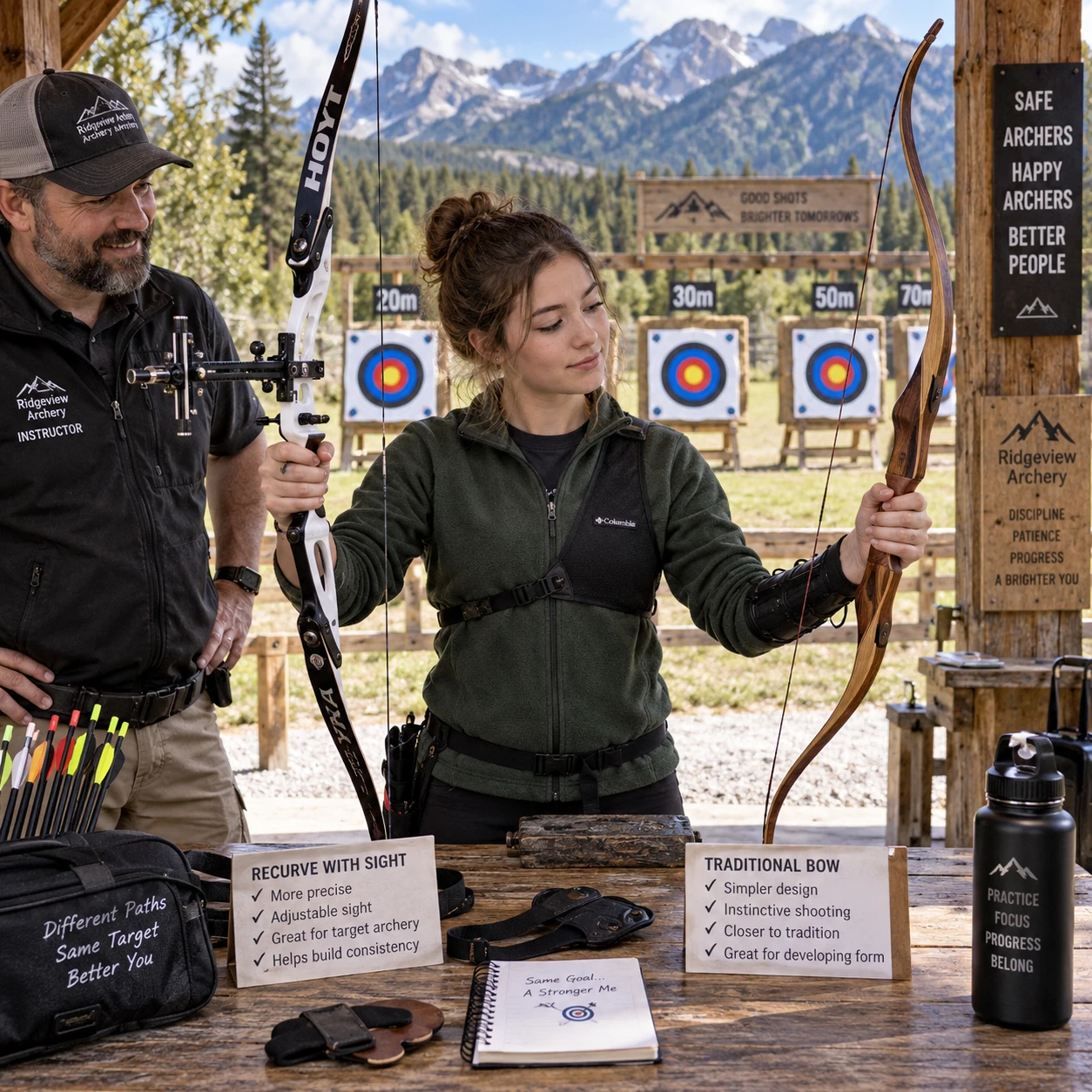
Choosing between sighted and instinctive archery comes down to how you prefer to aim, what kind of shooting you want to do, and which equipment feels comfortable. A bow sight gives you a visible aiming reference; instinctive archery relies on visual focus, repeated form, and practice to guide the arrow.
Neither method is automatically easier or more accurate for every beginner. A safe lesson, consistent technique, and time on the range matter more than picking a style based on reputation.
What’s the Difference Between Sighted and Instinctive Archery?
Sighted archery uses a bow-mounted sight as an aiming reference, while instinctive archery uses the archer’s visual focus and learned coordination without consciously lining up a sight. Both methods depend on sound form and a repeatable shot.
With sighted archery, you look through or toward the bow sight and align its pin or aiming mark with the target. You also need a consistent anchor point, the place your drawing hand settles on your face, and a repeatable stance and release. The sight helps organize the aim, but it cannot correct inconsistent technique.
In instinctive archery, the archer focuses on the target and learns to coordinate the bow, arrow, and body through repeated shots. “Instinctive” does not mean shooting carelessly or without technique. Good posture, a stable anchor point, and a controlled release still matter; practice helps connect that form with where the arrow lands.
The distinction is mainly about the aiming reference, not whether one style requires skill and the other does not. Recurve bows can be used in either style, depending on their setup and the archer’s rules or goals. Compound bows are commonly used with sights, though equipment choices vary.
How Sighted Archery Works
A bow sight provides a repeatable visual reference that helps an archer aim at a target. The archer aligns the sight with the target while maintaining consistent form and following the range’s safety procedures.
A bow sight may have a single pin or several pins, depending on the setup. Some sights can be adjusted for different distances. For a beginner, an instructor can explain how the particular sight works and help make sure it is appropriate for the bow, arrows, and range. Sight settings are equipment-specific; they are not a substitute for instruction or safe handling.
To get useful feedback, keep the rest of the shot as consistent as possible:
- Use the same stance and bow-hand position each time.
- Draw smoothly and return to the same anchor point.
- Align the sight with the target without rushing the release.
- Follow through, then check where the arrows group before making adjustments.
The main advantage is that the sight gives you a clear reference when learning to aim, particularly in structured target practice. The trade-off is added equipment and another setup to understand. If your anchor point or release changes from shot to shot, the sight may reveal the inconsistency without fixing it.
How Instinctive Archery Works
Instinctive archery develops aiming through visual focus and repeated, consistent shots, usually without a bow sight. The archer looks at the target and learns how body alignment and the arrow’s path relate to the point of impact.
Many beginners start at a short, instructor-approved distance and focus on a calm sequence: set the stance, draw to a reliable anchor point, keep attention on the target, release smoothly, and follow through. Over time, repeated practice builds a better feel for how the bow and arrow behave. This learning is not magic or a replacement for feedback; coaches and observed arrow groups help identify what is working.
Instinctive archery often pairs with a traditional recurve bow or another simple setup, but equipment varies. Some archers use different aiming techniques, such as consciously referencing the arrow tip. It is useful to ask an instructor what method a class teaches rather than assuming every unsighted archer shoots the same way.
The appeal is a simple visual setup and a direct connection between the archer and the target. The challenge is that aiming can feel less explicit at first. A beginner may need patience to understand why an arrow lands high, low, or to one side, while still keeping form consistent.
Sight vs. Instinctive Archery for Beginners
Sighted and instinctive archery offer different kinds of feedback: a sight gives a visible aiming reference, while instinctive shooting develops a feel for aiming through repetition. Neither guarantees an easier learning curve, better consistency, or more accuracy for every beginner.
Consider these practical differences:
- Learning the aim: A sight makes the aiming point easier to identify. Instinctive archery asks you to build coordination between target focus and the shot.
- Consistency: Both require repeatable form, especially a stable anchor point and release. A sight can make aim easier to inspect, but it will not make inconsistent shots consistent.
- Equipment: Sighted setups include a bow sight and may need appropriate adjustment. Instinctive setups can be visually simpler, though bows, arrows, and accessories still need to suit the archer and be checked by a qualified person.
- Feedback: A sight offers a clear aiming reference. For instinctive practice, arrow groups, coaching, and careful attention to form provide feedback.
- Practice needs: Both benefit from regular, supervised target practice. The most useful routine is one you can follow safely and consistently.
A common beginner mistake is blaming the aiming method for every miss. A changing anchor point, rushed release, or poor stance can scatter arrows with either approach. Another is changing equipment or technique after each poor shot; make adjustments with an instructor and change one factor at a time.
Choosing a sight for clearer aiming means accepting a more involved setup. Choosing instinctive archery for simplicity means accepting that the aiming reference may feel less obvious while you learn. Your lesson experience and comfort are better guides than claims that one style is universally superior.
Which Style Might Suit Your Goals?
Your goals and preferred equipment can help narrow the choice, but trying each method with a qualified instructor is the best way to see what feels natural. Think about the type of target practice you want and how much equipment you want to learn.
- Choose a sighted introduction if you want a visible aiming reference for structured target shooting or are interested in learning a setup often used with compound bows. Ask the instructor to explain the sight and how it fits the class equipment.
- Try instinctive archery if you are drawn to a simpler aiming setup or want to explore traditional-style shooting with a recurve bow. Expect to work on form and visual focus rather than searching for a sight pin.
- Keep your options open if you do not yet know what you enjoy. Many beginner programs provide suitable equipment and introduce fundamentals before asking you to settle on a style.
Also consider practical factors: whether the local range teaches one approach, whether you can borrow appropriate equipment, and whether you enjoy making small adjustments to a setup. You do not need to buy a sight or a new bow before your first lesson. Start with range equipment and an instructor’s advice.
How to Try Both Approaches
Try both styles under qualified supervision, using range-approved equipment and a safe target setup. Keep the bow, distance, and practice conditions appropriate to your skill level, and follow the instructor’s commands at all times.
For a fair comparison, arrange a beginner lesson or ask a coach whether the range can demonstrate both approaches. Then use a simple process:
- Learn the range rules, including when to shoot, when to retrieve arrows, and how to carry and handle a bow safely.
- Use equipment selected or checked by the instructor. Do not change a bow sight or use unfamiliar arrows without guidance.
- Practice the same basic shot sequence with each method: stance, draw, anchor, aim, release, and follow-through.
- At a suitable distance, pay attention to comfort, clarity of aim, and how well you can repeat the shot. Ask the instructor to interpret your arrow groups.
- Try more than a handful of shots if the lesson allows. First attempts can feel awkward in either style, so avoid judging only by one good or poor arrow.
Keep the comparison focused on learning, not score. A beginner who is relaxed, follows instructions, and can repeat a safe shot sequence is gathering more useful information than someone trying to prove one method is better. Once you have experience, you can choose a style, continue exploring both, or change direction with advice from your coach.
Frequently Asked Questions
Beginners can learn either aiming method, and a bow sight is optional rather than a universal requirement. The right choice depends on instruction, goals, equipment, and personal comfort.
Do beginners need a bow sight?
No. A bow sight can provide a clear aiming reference, but beginners can also learn instinctive archery with suitable instruction. Use the equipment provided by your range before deciding whether you need to buy anything.
Is instinctive archery harder to learn?
It can feel less straightforward at first because there is no sight pin to line up. However, difficulty varies, and instinctive archery still uses structured form, coaching, and practice. A beginner’s experience depends on the method taught and how comfortable they feel with it.
Can you use a sight on a recurve bow?
Yes, many recurve bows can be set up with a bow sight, while other recurve setups are used without one. Check that the bow and accessories are compatible, and ask an instructor or qualified shop to help with setup.
Can you switch between sighted and instinctive archery?
Yes, archers can try both. Some skills, such as stance, a consistent anchor point, and controlled release, carry across methods, though aiming habits differ. Change under supervision and give yourself time to adjust rather than switching back and forth during every short practice session.